Fitness Routines That Enhance Strength and Flexibility
Sophia Clarke September 25, 2025
Fitness in 2025 is no longer about simply building muscle or improving endurance. The focus has shifted toward creating balanced routines that enhance both strength and flexibility. This dual approach ensures long-term health, reduces the risk of injury, and supports daily functional movement. More people are turning to fitness routines that enhance strength and flexibility because they combine resilience, agility, and mobility, making them ideal for athletes, professionals, and everyday individuals. With new training methods, wearable technology, and scientific insights shaping fitness trends, this article explores how these routines are evolving and offers practical strategies to integrate them into your lifestyle.
Why Strength and Flexibility Go Hand in Hand
Strength training and flexibility were once seen as separate goals. Weightlifting built strength, while yoga and stretching focused on flexibility. Today, research shows that combining the two creates a more complete fitness profile. A 2023 study in the Journal of Strength and Conditioning Research found that people who combined resistance training with mobility work improved performance by 20% compared to those who trained strength alone. Flexible muscles and joints support stronger lifts, while strength training stabilizes movements during stretching and yoga. This makes fitness routines that enhance strength and flexibility essential for long-term physical health.
Trend 1: Functional Strength and Mobility Training
Functional training focuses on movements used in daily life, such as squatting, pushing, pulling, and twisting. Mobility drills are added to increase joint range of motion and stability. In 2025, hybrid programs that combine functional strength and mobility work are gaining popularity. Gyms and apps now offer classes that blend kettlebell exercises with hip-opening stretches. Practical tip: Add mobility warm-ups such as hip circles or dynamic lunges before lifting. These movements prepare joints and reduce injury risks.
Trend 2: Hybrid Workouts That Blend Disciplines
Hybrid fitness is one of the biggest emerging trends. Workouts that blend yoga, Pilates, and strength training are becoming mainstream. Programs like “Yoga Strength Fusion” and “Pilates Power Flow” emphasize stability, control, and muscle engagement while maintaining flexibility. According to Mindbody’s 2024 Fitness Report, hybrid workout participation grew by 35% in the past year. Practical tip: Dedicate two sessions weekly to hybrid classes, alternating between weight-based circuits and yoga-inspired flows.
Trend 3: Bodyweight Training for Flexibility and Strength
Calisthenics, once considered basic, has gained new relevance. Movements like push-ups, pull-ups, and planks enhance strength while promoting flexibility and coordination. Many advanced calisthenics exercises, such as planches or handstands, demand both strength and mobility. The American College of Sports Medicine (2024) ranked bodyweight training among the top fitness trends for its accessibility and effectiveness. Practical tip: Incorporate bodyweight circuits including push-ups, air squats, and planks. Add mobility drills such as spinal twists or shoulder dislocates to improve flexibility.
Trend 4: Strength-Based Yoga Practices
Yoga is evolving beyond relaxation. Strength-based yoga practices like Power Yoga and Ashtanga integrate isometric holds and dynamic flows that build muscle endurance. These classes combine the benefits of strength and flexibility in a single session. A 2023 Harvard Medical School article noted that yoga improves bone density while reducing stress, making it a complete fitness routine. Practical tip: Replace one weight-training session each week with a strength-based yoga class to enhance balance and mobility.
Trend 5: Resistance Bands for Mobility and Stability
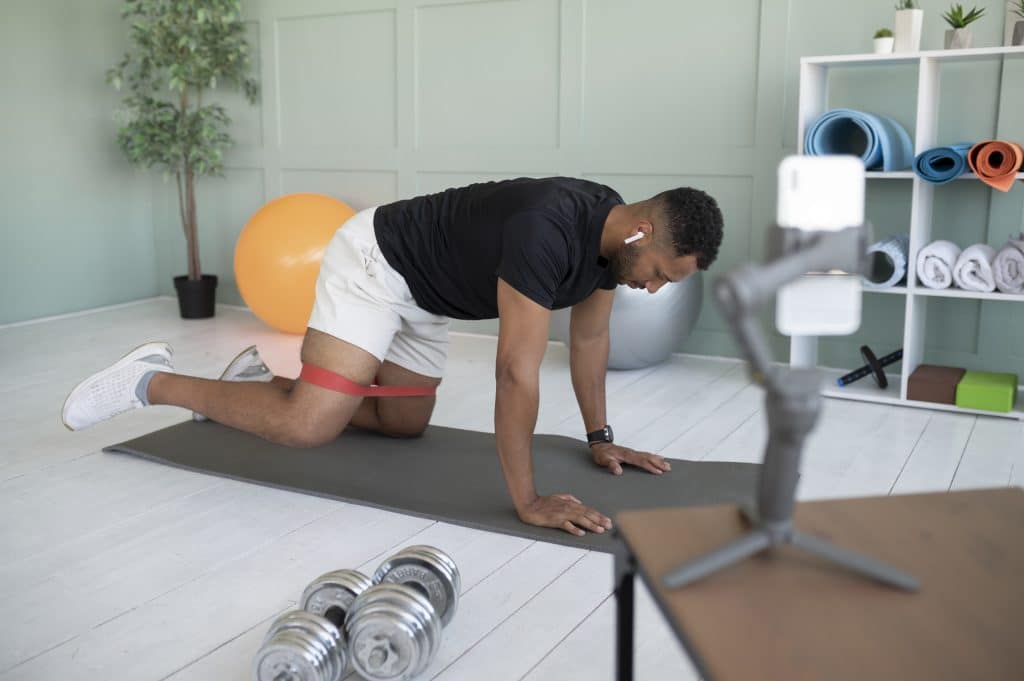
Resistance bands are simple but powerful tools that improve both strength and flexibility. They provide constant tension, which challenges muscles while allowing safe, joint-friendly movements. Bands are increasingly used in warm-ups, rehabilitation, and mobility-focused strength routines. According to NASM (National Academy of Sports Medicine, 2024), resistance bands are one of the most versatile tools for injury prevention and performance improvement. Practical tip: Use bands for glute activation, shoulder strengthening, and hip mobility before your main workout.
Trend 6: Technology-Enhanced Training
Wearables and smart fitness apps now track more than steps and calories. In 2025, devices measure mobility, flexibility, and recovery alongside strength metrics. Apps like WHOOP and Oura provide insights into recovery and mobility readiness, while platforms like Freeletics design AI-powered workouts that balance strength and flexibility goals. Practical tip: Use wearables to track recovery and range of motion. Adjust training intensity based on data to prevent overtraining.
Trend 7: Mobility-First Strength Programs
Instead of stretching as an afterthought, many programs now prioritize mobility as the foundation of strength training. Coaches emphasize full range of motion exercises like deep squats, overhead presses, and controlled lunges. These improve both flexibility and strength simultaneously. A 2024 Sports Medicine review confirmed that resistance training performed through a full range of motion enhances flexibility as much as traditional stretching. Practical tip: Perform full-depth squats and overhead presses with lighter weights to build strength while improving joint mobility.
Trend 8: Recovery and Active Flexibility Sessions
Recovery has become a central part of fitness planning. Stretching, foam rolling, and low-intensity mobility drills are now integrated into weekly routines. These sessions enhance flexibility while helping muscles recover from strength training. According to the National Institutes of Health (2023), regular active recovery reduces muscle soreness and improves long-term performance. Practical tip: Schedule one recovery session per week with foam rolling, mobility flows, and light stretching.
Trend 9: Group Classes That Focus on Strength and Flexibility
Fitness communities continue to thrive, and group classes are adapting to demand. Studios now offer classes that combine weighted circuits with mobility stations. This creates variety while ensuring participants build strength and flexibility together. Group environments also improve motivation and accountability. Practical tip: Join classes such as functional strength flow or mobility boot camps. These formats keep you engaged and balanced in training.
Practical Guide: Building Your Own Routine
To create a balanced plan, combine strength training with flexibility practices. Here’s an example of a weekly routine:
- Day 1: Full-body strength workout with mobility warm-up
- Day 2: Hybrid class blending yoga and Pilates
- Day 3: Bodyweight calisthenics with flexibility drills
- Day 4: Rest or light mobility work
- Day 5: Strength-based yoga practice
- Day 6: Functional training with resistance bands
- Day 7: Active recovery with foam rolling and stretching
This schedule ensures strength development, flexibility improvement, and recovery throughout the week.
Conclusion: The Future of Balanced Fitness
The demand for fitness routines that enhance strength and flexibility reflects a broader shift toward sustainable health. Instead of focusing solely on aesthetics or raw power, people now seek long-term resilience, injury prevention, and functional performance. With trends like hybrid workouts, mobility-first training, and smart technology guiding fitness, 2025 offers more options than ever for building strength and flexibility together. By adopting these routines, individuals can improve performance, support daily function, and maintain overall well-being for years to come.
References
- Review on Wearable Technology in Sports: https://www.mdpi.com
- Fitness Industry Trends for 2025, https://pvolvefranchise.com
- 6 Top Fitness Trends for 2024, https://cathe.com

 Travel Destinations That Encourage Adventure and Learning