Emerging Technologies in Education
Elena Martinez September 23, 2025
The world of education is undergoing a dramatic transformation, largely driven by the rapid evolution of technology. As digital tools, artificial intelligence (AI), and immersive learning environments continue to advance, they are reshaping how students and teachers interact, how content is delivered, and how learning outcomes are achieved. Emerging technologies in education not only enhance the learning experience but also pave the way for more personalized, accessible, and efficient teaching methods.
In this article, we will explore some of the most exciting emerging technologies in education and how they are set to revolutionize the way we learn and teach. These innovations are not just enhancing traditional methods; they are creating entirely new possibilities for both educators and learners.
1. Artificial Intelligence (AI) in Education
Artificial Intelligence (AI) has become one of the most talked-about trends in education, and for good reason. By analyzing vast amounts of data, AI is helping educators personalize learning experiences and streamline administrative tasks. AI-powered tools can assess student performance in real-time, identify knowledge gaps, and suggest tailored learning paths to address those gaps.
Key applications of AI in education include:
- Personalized learning: AI can analyze student data to identify strengths and weaknesses, allowing for customized learning experiences. Tools like AI-driven tutoring platforms (such as Squirrel AI) adjust content to meet the individual needs of each student.
- Automated grading: AI can save teachers a significant amount of time by automating the grading process for assignments and exams. AI can even evaluate open-ended responses, improving grading efficiency and accuracy.
- Intelligent tutoring systems: AI-powered tutors can provide immediate feedback and assistance to students, making it possible for learners to receive support outside traditional classroom hours. These systems are available 24/7, providing a consistent learning experience.
2. Virtual and Augmented Reality (VR/AR)
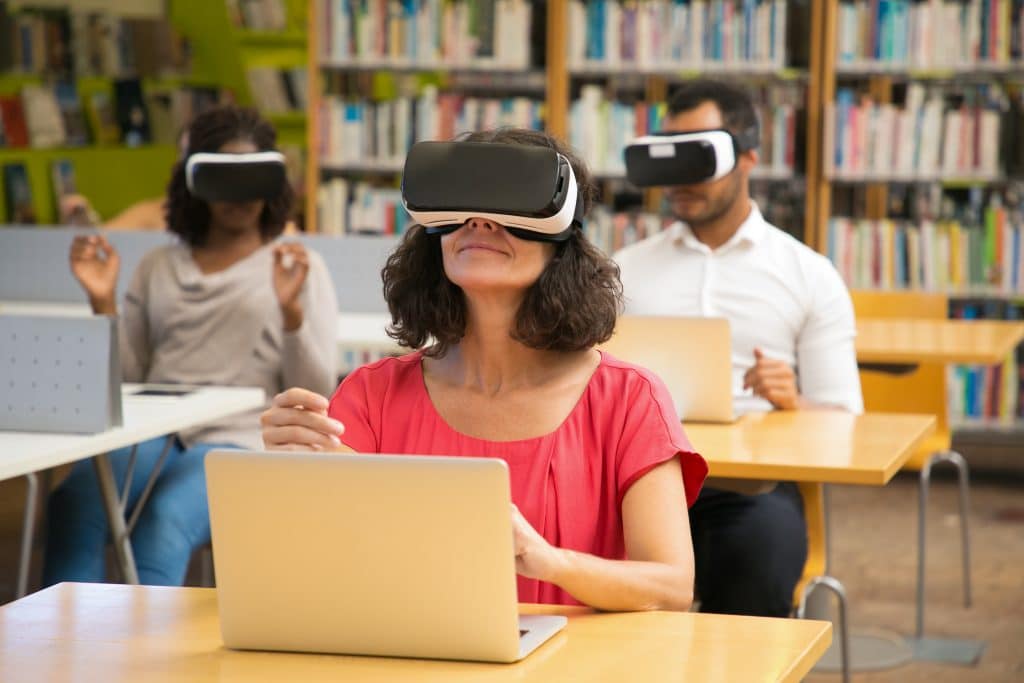
Virtual Reality (VR) and Augmented Reality (AR) are immersive technologies that are gradually being integrated into the classroom. These technologies create interactive environments that engage students in hands-on learning experiences, making education more immersive and experiential. VR and AR have the potential to revolutionize subjects such as science, history, and medicine by providing real-time, interactive visualizations.
How VR and AR are being used in education:
- Immersive simulations: VR allows students to experience complex concepts, such as anatomy or astronomy, by virtually “entering” the subject matter. For example, students can walk through a 3D model of the human body, interact with cells, or travel through the solar system in ways traditional textbooks cannot offer.
- AR-enhanced textbooks: With AR, textbooks and other learning materials come to life. By using AR apps, students can scan pages and watch videos, view 3D models, or access additional information, making learning more engaging and interactive.
- Virtual field trips: Through VR, students can “visit” historical sites, museums, or distant countries, expanding their horizons without leaving the classroom. These virtual experiences are particularly beneficial for students who may not have access to physical field trips.
The integration of VR and AR in education not only makes learning more engaging but also allows students to experience real-world scenarios in a controlled environment, providing valuable experiential learning opportunities.
3. Blockchain Technology in Education
Blockchain, the technology that underpins cryptocurrencies like Bitcoin, is also finding its way into the education sector. While it may seem like a futuristic tool, blockchain’s potential to provide secure, transparent, and immutable records is highly valuable for educational institutions. Blockchain can streamline administrative processes, secure student data, and even verify credentials in a way that’s both efficient and trustworthy.
Applications of blockchain in education include:
- Credentialing and certification: Blockchain can be used to issue secure, verifiable certificates and diplomas. This ensures that academic credentials are tamper-proof and can be easily verified by employers, universities, or other institutions.
- Digital portfolios: Students can build digital portfolios stored on blockchain, which track their learning progress and achievements over time. These portfolios are secure and can be shared with potential employers or educational institutions.
- Data privacy: With blockchain, students and educators can have more control over their personal data. It can be used to create secure, decentralized databases that protect sensitive information while still allowing authorized access when needed.
Blockchain offers greater security, transparency, and efficiency, making it a promising technology for transforming administrative processes in education.
4. Adaptive Learning Technology
Adaptive learning technology uses algorithms to adjust learning content and resources based on individual student needs. This technology personalizes the learning experience by offering customized exercises, quizzes, and activities that are tailored to the learner’s proficiency level. As students progress, the system adapts, ensuring they are always challenged but not overwhelmed.
Benefits of adaptive learning:
- Personalized learning: Adaptive learning systems offer students personalized feedback, adjusting the difficulty level of lessons based on their performance. This helps students learn at their own pace and ensures they are adequately challenged.
- Real-time progress tracking: Teachers can monitor student progress in real time and receive data on areas where students may need additional support. This allows educators to make timely interventions.
- Increased engagement: By offering content that is aligned with the student’s current level of understanding, adaptive learning keeps students more engaged and motivated.
Several education platforms, including Knewton and DreamBox, are using adaptive learning technology to help students in subjects like mathematics and language arts, creating personalized learning environments that maximize each student’s potential.
5. Learning Management Systems (LMS) Powered by AI
Learning Management Systems (LMS) are a staple in education, especially in online learning environments. However, as AI technology advances, LMS platforms are becoming more intelligent. These systems now leverage AI to offer enhanced features, such as predictive analytics, automated grading, and personalized recommendations.
How AI-powered LMS are transforming education:
- Predictive analytics: AI in LMS can predict student performance and identify at-risk students. By analyzing patterns in student behavior, these systems can flag students who may need extra attention, enabling teachers to intervene proactively.
- Customized content: AI-powered LMS platforms can recommend learning materials based on individual student preferences, learning styles, and past performance. This ensures students receive content that best suits their learning needs.
- Automated administrative tasks: AI can assist educators with routine administrative tasks, such as attendance tracking, grading, and feedback. This allows teachers to focus more on teaching and less on time-consuming administrative work.
AI-powered LMS platforms are significantly improving the efficiency and effectiveness of online learning by offering more personalized and streamlined learning experiences.
6. 5G and the Future of Mobile Learning
The rollout of 5G networks is set to revolutionize education by providing faster, more reliable internet connections. This technological advancement has the potential to improve mobile learning experiences by enabling seamless access to content, real-time video streaming, and interactive learning tools, all of which are essential for an increasingly mobile and digital classroom.
How 5G will impact education:
- Faster access to resources: With 5G, students can access high-quality educational content, including immersive VR/AR experiences, without lag or buffering. This enables a more fluid and interactive learning experience, even in remote areas.
- Enhanced collaboration: 5G will allow students and educators to collaborate in real-time, regardless of location. Virtual classrooms, video conferencing, and collaborative tools will become more efficient, supporting a global learning community.
- Mobile-first learning: As mobile devices continue to be integral to education, 5G will enable a more robust mobile learning experience. Students will be able to access online courses, participate in discussions, and engage with multimedia content with greater ease and speed.
5G is paving the way for a more connected, flexible, and efficient learning environment, especially in mobile-first education.
Conclusion: The Future of Education is Tech-Driven
Emerging technologies are revolutionizing the education sector by enhancing the learning experience, improving accessibility, and making education more personalized and efficient. From AI and VR to blockchain and 5G, these technologies are enabling new forms of learning that are more interactive, engaging, and effective. As these innovations continue to evolve, the future of education looks promising, offering new opportunities for both educators and learners.
To fully leverage the potential of these technologies, educators must stay updated with the latest trends and tools. By embracing these innovations, educational institutions can create more dynamic and inclusive learning environments that meet the needs of every student.
References
- Analyzing augmented reality, https://www.sciencedirect.com
- How AI-Driven LMS Enhances Learning Efficiency, https://elearningindustry.com
- AI in Education: The Rise of Intelligent Tutoring Systems, https://www.park.edu/blog

 Home Organization Ideas That Reduce Stress